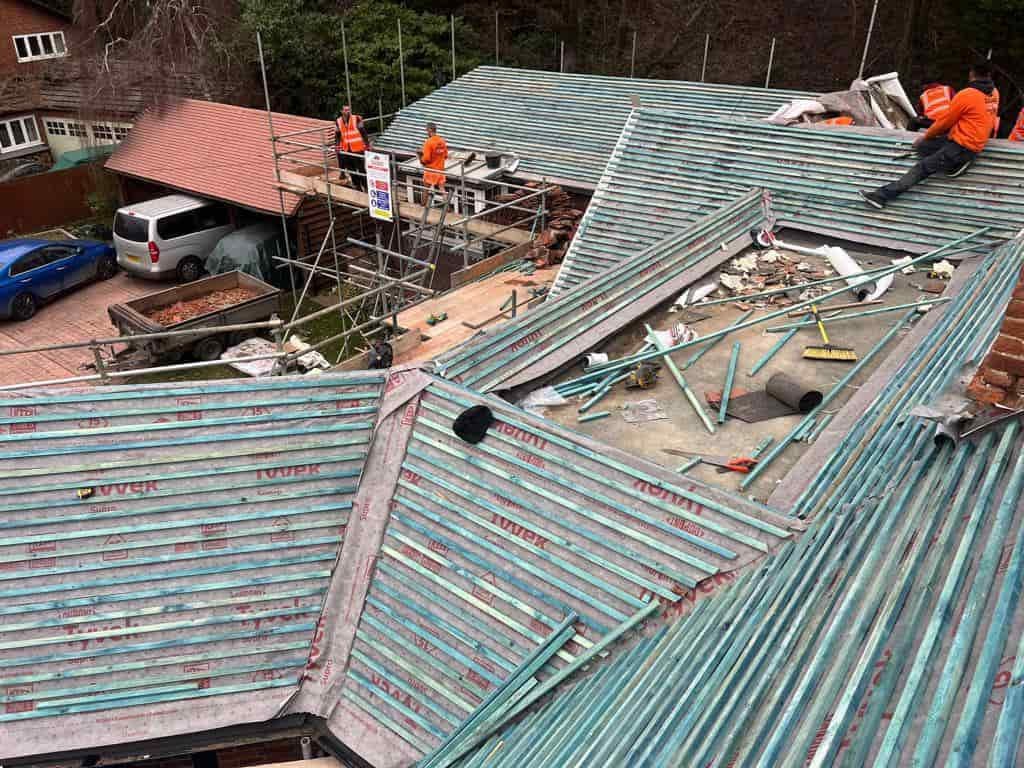
7 Signs Your Roof May Have Been Damaged by Strong Winds
Strong winds can place considerable strain on a roof, even when no obvious damage is visible from ground level. Tiles, fixings, flashing and roofline components can all be disturbed, creating openings through which rainwater may enter.
Recognising the early warning signs can help property owners in Daventry, Northamptonshire, arrange an inspection before a minor defect develops into more extensive damage.
How to Recognise Possible Wind Damage to Your Roof
1. Missing or Displaced Roof Tiles
Missing tiles are among the clearest signs of wind damage. However, a tile does not need to fall completely from the roof to cause a problem. It may have slipped out of alignment, lifted at one edge or moved just far enough to expose the layers beneath.
From ground level, look for uneven courses, visible gaps or tiles that no longer sit flush with those around them. Avoid attempting to inspect the roof by climbing onto it yourself.
2. Loose Tiles That Rattle in Windy Conditions
Rattling or tapping sounds from the roof during strong winds may indicate that tiles or other components have become loose. A tile can appear intact while its fixing has weakened or failed.
Movement should be investigated because repeated lifting can damage the tile, surrounding materials and underlying membrane. Loose components may become increasingly unstable during further poor weather.
3. Pieces of Roofing Material on the Ground
Fragments of tile, mortar, felt or other roofing material around the property can provide an important warning. Even small pieces may indicate deterioration around a ridge, verge, chimney or roof junction.
After strong winds, inspect the ground and gutters from a safe position. Any unfamiliar debris should prompt a closer professional assessment, especially when its source cannot be identified.
4. Damage Around Ridges and Verges
Ridge tiles run along the highest points of a pitched roof, while verge details protect its exposed edges. Both areas experience significant wind pressure.
Look for gaps, cracked mortar, displaced tiles or sections that appear uneven. Damage in these positions can allow water to enter beneath the covering and affect nearby battens, underlay and roof timbers.
5. Lifted or Damaged Lead Flashing
Lead flashing protects vulnerable junctions where the roof meets chimneys, walls and other structures. Strong winds can lift an exposed edge, loosen fixings or worsen existing splits.
Once flashing no longer forms a secure weatherproof junction, rain can be driven underneath it. Damp patches may then appear some distance from the actual defect because water can travel along timbers and other internal surfaces.
6. New Damp Marks or Water Ingress
A ceiling stain, damp patch or drip following windy weather may indicate that the roof covering has been disturbed. Other possible signs include damp insulation, moisture in the loft or staining on roof timbers.
The visible mark does not always sit directly beneath the damaged section. A proper inspection is therefore important to trace the route of the water and avoid repairing the wrong area.
7. Damaged Gutters, Fascias or Soffits
Wind damage is not limited to tiles. Gutters can loosen, fascia boards may become displaced and soffit sections can crack or detach. These components help direct rainwater away while protecting the edges and underside of the roof.
Changes such as sagging guttering, loose fittings or gaps along the roofline should not be overlooked. Damage in these areas may also indicate that nearby roofing materials have been affected.
Why Prompt Inspection Matters
A small opening can admit a surprising amount of water when rain is driven by strong winds. Moisture may then affect underlay, battens, insulation, ceilings and timber before the problem becomes obvious inside the property.
Prompt inspection allows the full extent of the damage to be established. It also helps distinguish between a localised defect that can be repaired and more widespread movement requiring broader attention.
What a Professional Roofer Will Check
A thorough assessment should cover the complete roof rather than only the most visible concern. This may include checking:
- Tiles and their alignment
- Ridge and verge details
- Flashing and roof junctions
- Valleys and drainage routes
- Gutters, fascias and soffits
- Underlay and timbers where accessible
- Previous repairs that may have loosened
This systematic approach identifies both the immediate damage and any related weaknesses that could allow further water ingress.
Conclusion
The main signs of wind damage include missing or displaced tiles, unusual rattling, roofing debris, damaged ridges and verges, lifted flashing, new damp marks and loose roofline components. Some problems are easy to spot, while others remain hidden until water enters the building.
If you have noticed a change in your roof following strong winds, EA Roofing Daventry provides professional roof inspections and repairs in Daventry, Northamptonshire. Contact the team to arrange an assessment and determine the most appropriate repair for your roof.
Call us on: 01327 223 899
Click here to find out more about EA Roofing Daventry
Click here to complete our contact form and see how we can help with your roofing needs.