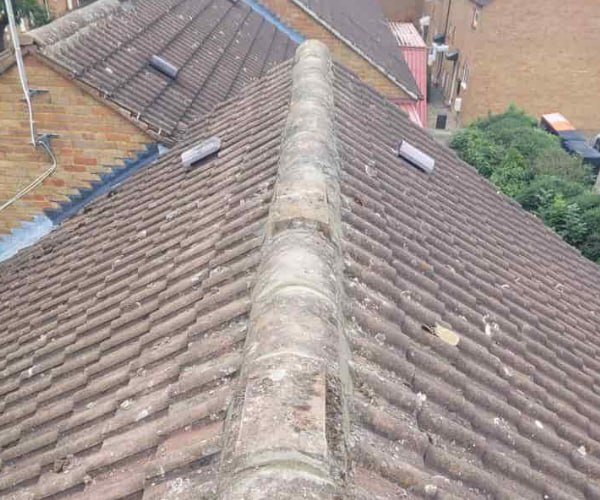
Why Is It Important to Check the Surrounding Tiles During Roof Repairs?
When a damaged or slipped roof tile is discovered, the most obvious response is to repair or replace that individual tile. However, focusing only on the visible defect can mean that related problems nearby are overlooked. Roof tiles work together as an overlapping system, so the condition of one tile can affect the performance of those around it.
Checking the surrounding area during a roof repair helps identify why the original problem occurred, whether other tiles have been weakened and whether the roof can continue to shed rainwater effectively.
Why the Wider Roof Area Matters During a Tile Repair
A roof repair should resolve the source of the problem rather than simply improve its appearance. Examining the adjacent tiles, fixings, battens and underlay provides a clearer understanding of the roof’s condition and supports a more dependable repair.
Nearby Tiles May Have Suffered the Same Damage
Strong winds, impact and general weather exposure rarely affect one tile in complete isolation. Tiles next to the visible defect may have lifted slightly, developed fine cracks or become loose without moving far enough to be noticed from ground level.
If these tiles are not checked, they may fail later and create another opening in the roof. Inspecting the surrounding section allows vulnerable materials to be identified while access is already available.
Movement Can Spread Across Several Tiles
Roof tiles are laid in rows, with each tile overlapping and interacting with neighbouring materials. When one tile slips, it can disturb the alignment of adjacent tiles or leave their edges more exposed to wind.
Movement may also indicate that fixings have deteriorated or that the supporting battens are no longer providing secure attachment points. Repositioning a single tile without investigating this movement may only provide a temporary result.
The Visible Tile May Not Be the Source of the Leak
Water can enter through a small gap and then travel along the underlay, battens or rafters before appearing inside the property. A damp patch beneath one part of the roof does not necessarily mean the tile directly above it is responsible.
Checking the surrounding tiles helps the roofer trace possible water-entry routes. Particular attention may be given to laps, joints, penetrations and nearby roof details where rainwater can be directed beneath the covering.
Cracks Are Not Always Easy to See
Some roof tile damage is obvious, but hairline cracks and worn corners can be difficult to identify from a distance. These defects may only become apparent when the tiles are examined closely.
A cracked tile can still appear correctly positioned while allowing moisture to pass through during wind-driven rain. Identifying these subtle defects reduces the risk of completing a repair while leaving another weakness nearby.
Battens and Fixings May Be Part of the Problem
Tiles depend on sound fixings and supporting battens. If a nail has corroded, a fixing has loosened or a batten has deteriorated, fitting a new tile without addressing the underlying issue will not restore reliable support.
Where appropriate, lifting nearby tiles allows the roofer to examine the concealed components beneath them. Any localised damage can then be corrected before the roof covering is reinstated.
The Underlay May Have Been Exposed
Underlay provides secondary protection if rain passes beneath the tiles. A missing or displaced tile can leave this layer exposed to sunlight, moisture and physical damage.
If the underlay has torn, become brittle or developed holes, replacing the tile alone may not fully restore the roof’s weather resistance. Inspecting beneath and around the damaged area helps determine whether the protective layer also requires attention.
Poor Alignment Can Affect Water Drainage
Tiles must maintain consistent headlaps, sidelaps and alignment to guide water down the roof. A repair that leaves surrounding tiles uneven or incorrectly seated can create gaps or direct rainwater beneath the covering.
Checking the wider section allows the repaired area to be integrated correctly with the existing roof. This is especially important when nearby tiles have shifted or previous work has disrupted the original layout.
Wider Inspection Can Reduce Repeat Repairs
Recurring roofing problems are often caused by treating only the most visible symptom. A broader inspection may reveal several small defects connected to the same area, allowing them to be addressed as one repair.
This approach can help prevent repeated water ingress, further tile movement and avoidable deterioration of the materials beneath the roof covering.
What Should Be Checked Around a Damaged Tile?
During a professional roof repair, the surrounding inspection may include:
- Adjacent tiles for cracks, movement or surface deterioration
- Tile fixings and clips
- Supporting battens
- The condition of accessible underlay
- Tile alignment and overlaps
- Nearby ridge, verge, valley or flashing details
- Signs of water tracking beneath the covering
- Previous repairs that may have started to fail
The scope of the inspection should reflect the type of roof, the position of the damage and the condition of the surrounding materials.
Conclusion
Checking the surrounding tiles is an important part of a reliable roof repair because the visible defect may be only one part of the problem. Nearby tiles, fixings, battens and underlay can all be affected by the same movement, weather exposure or water ingress.
EA Roofing Daventry provides professional roof inspections and repairs in Daventry, Northamptonshire. If you have noticed a slipped, cracked or missing tile, contact the team to arrange an assessment of the damaged area and the surrounding roof covering.
Call us on: 01327 223 899
Click here to find out more about EA Roofing Daventry
Click here to complete our contact form and see how we can help with your roofing needs.